

DevOps as a Service is an operating model in which an external team provides ongoing DevOps and infrastructure capability within an agreed scope. It is not a recruitment service or simply a bundle of engineering hours.
The model becomes relevant when a software team needs deployments to stop being a source of problems, production to remain under control and infrastructure to evolve without depending on one person.
DevOps as a Service is not simply about buying a few hours from someone who knows Docker, Terraform, AWS or Kubernetes.
When implemented properly, it is a model that gives companies access to specialised capabilities to design, automate, maintain and improve their technology platform without having to build a complete internal DevOps team from day one.
But it is not the right solution for every company either.
In some cases, hiring internally will make more sense. In others, a focused project will be enough. And for some organisations, outsourcing part of DevOps can be a practical way to move forward without unnecessarily increasing fixed structure.
So before asking:
“Do we need to hire a DevOps engineer?”
it is worth asking a different question:
What operational problem are we actually trying to solve, and what capability do we really need to solve it?
1. What is DevOps as a Service?
DevOps as a Service is a model through which a company gains access to specialised DevOps, Cloud, automation and operational capabilities through an external team or provider.
Depending on the organisation’s needs, this may include areas such as:
- cloud infrastructure design and evolution;
- Infrastructure as Code automation;
- CI/CD pipeline creation and maintenance;
- containerisation;
- Kubernetes;
- observability and monitoring;
- identity and access management;
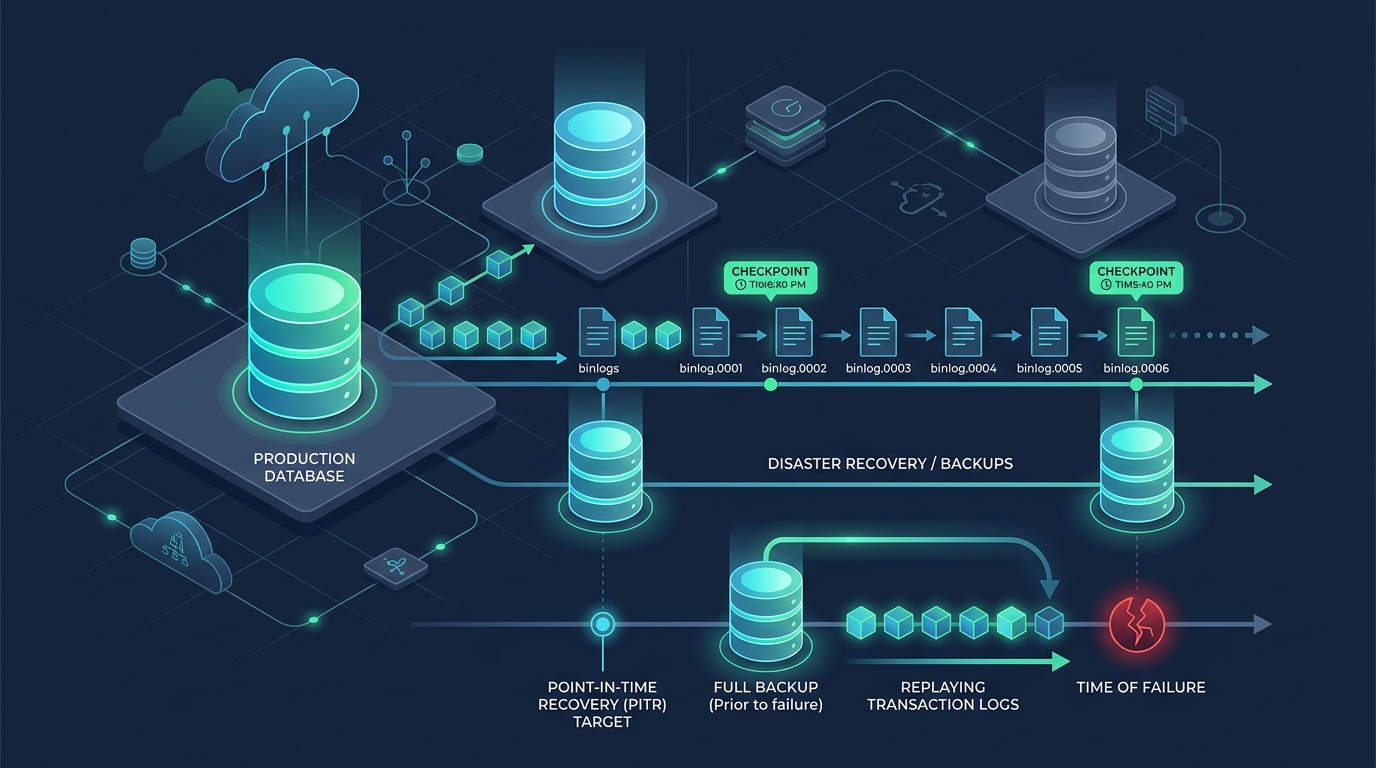
- backups and recovery;
- cloud cost optimisation;
- infrastructure security;
- incident management;
- documentation and operational procedures;
- technical support for development teams.
When the need is recurring, a DevOps as a Service model can provide this capability without forcing the company to build an entire specialist team from scratch.
The main difference compared with simply purchasing engineering hours is the responsibility model.
A DevOps service should help make the platform progressively more predictable, documented, automated and operable.
It is not just about completing tickets.
It is about reducing operational friction.
2. The problem often appears as the company grows
Many companies reach DevOps after a period of growth.
At first, infrastructure is usually relatively simple.
One developer configures a server.
Another creates the deployment pipeline.
Someone adds Terraform.
A managed database is introduced.
Then come additional environments, services, workers, queues, storage, CDNs, secrets, observability, multiple cloud providers or even Kubernetes.
Each individual decision may have made perfect sense at the time.
The problem begins when all of those decisions together form a platform that requires more and more time and specialised knowledge to maintain.
Some signs are easy to recognise:
- Developers spend too much time on infrastructure.
- Deployments still require manual intervention.
- Only one person truly understands production.
- Operational tasks are continuously postponed.
- Incidents are fixed but keep returning.
- Documentation is incomplete or outdated.
- The cloud bill keeps increasing without a clear explanation.
- Terraform no longer accurately represents production.
- There are many alerts, but little useful information.
- Ownership of parts of the platform is unclear.
In these situations, adding another tool does not necessarily solve the problem.
What is often missing is specialised operational capacity and a clear ownership model.
3. DevOps as a Service should not mean outsourcing control
There is a perfectly reasonable concern when a company considers outsourcing part of DevOps:
Will we end up depending on another company to understand our own infrastructure?
That should not happen.
In fact, a good DevOps service should achieve the opposite.
Infrastructure code, pipelines, repositories, documentation, accounts and architectural decisions should remain under the customer’s control.
For example:
- Infrastructure should be defined as code where appropriate.
- Relevant changes should be recorded.
- Documentation should remain in systems controlled by the organisation.
- Access should use named accounts and least privilege.
- Important architectural decisions should be explainable.
- Recovery procedures should be documented.
- Critical knowledge should not exist only in the provider’s head.
Outsourcing technical capability does not mean outsourcing platform knowledge.
The organisation should still be able to understand what it has, why it was built that way and how it could continue operating if the provider changed in the future.
4. What can a DevOps service include?
The scope depends heavily on the starting point.
A startup with five developers does not need the same thing as a SaaS platform with several teams, many services and hundreds of deployments per month.
Cloud infrastructure
Design, evolution and maintenance of infrastructure across providers such as AWS, Microsoft Azure, Google Cloud or Oracle Cloud Infrastructure.
This may include:
- networking;
- compute;
- storage;
- load balancers;
- databases;
- DNS;
- IAM;
- secret management;
- backups;
- high availability.
Not every problem requires the same model. You can explore our Cloud and DevOps services to distinguish between maintenance, projects, modernisation and specialist technical support.
Infrastructure as Code
Turning manual configuration into version-controlled infrastructure using tools such as Terraform can improve:
- reproducibility;
- change review;
- traceability;
- recovery;
- standardisation;
- reduction of configuration drift.
But using Terraform does not automatically create a good platform.
If infrastructure is still changed manually outside the codebase, modules are impossible to maintain or nobody dares to touch the state files, complexity has simply moved somewhere else.
CI/CD
A pipeline should not exist simply so the company can claim it has CI/CD.
Its purpose is to reduce manual intervention and make delivery more:
repeatable, verifiable and recoverable.
That may include:
- automated testing;
- reproducible builds;
- security analysis;
- promotion between environments;
- rollback strategies;
- approval for critical changes;
- traceability between code and deployment.
The objective is not to “have GitHub Actions”, “have GitLab CI” or “have Jenkins”.
The objective is to release software with a known level of risk.
Containerisation and Kubernetes
Docker and Kubernetes can be extremely useful tools.
But only when they solve a problem that justifies their cost and complexity.
A platform does not need Kubernetes simply because it has grown.
Before adopting it, it is worth evaluating scale, deployment frequency, number of services, isolation requirements and the internal capacity available to operate the cluster.
We cover this in more detail in when you should NOT migrate to Kubernetes.
If Kubernetes is already part of production, the problem may no longer be migration but continuous operation. In that case, specialised Kubernetes support may be more relevant.
Observability
Monitoring infrastructure is not simply about collecting metrics.
A useful observability strategy should help answer questions such as:
- Is the service working correctly?
- What changed?
- Where is the problem happening?
- Which users are affected?
- Do we have enough capacity?
- Is the issue likely to happen again?
Logs, metrics, traces and alerts should help teams make decisions.
They should not create another layer of noise.
Operations and maintenance
Infrastructure needs maintenance even when it appears not to be changing.
Areas that require ongoing attention include:
- updates;
- vulnerabilities;
- certificates;
- dependencies;
- backups;
- capacity;
- costs;
- alerts;
- permissions;
- service lifecycle.
When the main need is to keep infrastructure operational, review changes and reduce accumulated operational work, cloud infrastructure maintenance may be the better fit.
5. When does DevOps as a Service make sense?
There are several situations where this model can be particularly useful.
You have a development team but no platform team
This is probably one of the most common scenarios.
Developers can manage part of the infrastructure, but doing so consumes time that could otherwise be spent on the product.
As the platform grows, responsibilities begin to appear that require deeper specialisation.
Not necessarily because developers are incapable of doing them.
Simply because someone needs to dedicate time to them.
You need DevOps, but not a full-time person
There may be enough work to justify recurring support, but not enough to justify a full-time hire yet.
At that stage, external capacity can allow the company to progress without forcing a fixed organisational structure too early.
You need different areas of expertise
DevOps is not a single specialisation.
A platform may require knowledge of:
- AWS or Azure;
- Terraform;
- Kubernetes;
- networking;
- security;
- observability;
- CI/CD;
- databases;
- FinOps;
- recovery.
Expecting one hire to have deep expertise in every one of these areas is not always realistic.
You are preparing a migration or modernisation
A cloud migration, Kubernetes adoption or infrastructure transformation usually creates a temporary increase in highly specialised work.
For several months, the organisation may need expertise that will not be required full-time once the transformation is complete.
In these cases, external support can make sense during the transition, followed by a decision about which capabilities should remain internal.
Too much knowledge is concentrated in one person
If production depends on a single individual, the organisation is exposed to significant risk.
This is often described as the bus factor.
The issue is not only that the person may leave the company.
They may also:
- be on holiday;
- be ill;
- change role;
- be dealing with another incident;
- simply be unavailable.
Reducing this risk requires documentation, automation and knowledge distribution.
Not simply hiring another person who becomes equally indispensable.
Operational problems are beginning to affect product delivery
When deployments, incidents, infrastructure and cloud costs consume a significant amount of development time, DevOps stops being only a technical concern.
It becomes a business problem.
If unexplained spend is part of that problem, this practical cloud cost optimization guide explains how engineering and finance can establish ownership, a baseline and a continuous FinOps review process.
6. When should you NOT outsource DevOps?
Outsourcing is not always the best decision.
There are situations where building internal capability is much more appropriate.
You have permanent work for several people
If the organisation needs several people working every day on platform, infrastructure and reliability, it probably needs an internal team.
An external provider may still provide specialist expertise, but it should not indefinitely replace a clearly structural internal function.
The platform is central to the product
In some technology companies, the platform itself is part of the competitive advantage.
When infrastructure decisions are deeply connected to product strategy, keeping that expertise inside the organisation may be important.
You need daily, deeply integrated involvement
If DevOps needs to participate continuously in product planning, architecture, development and internal decision-making, integrating engineers directly into the organisation may provide better results.
You only need to solve one specific problem
You may not need DevOps as a Service.
You may simply need a project.
For example:
- migrate an application;
- create a Terraform foundation;
- redesign CI/CD;
- solve a Kubernetes issue;
- implement observability;
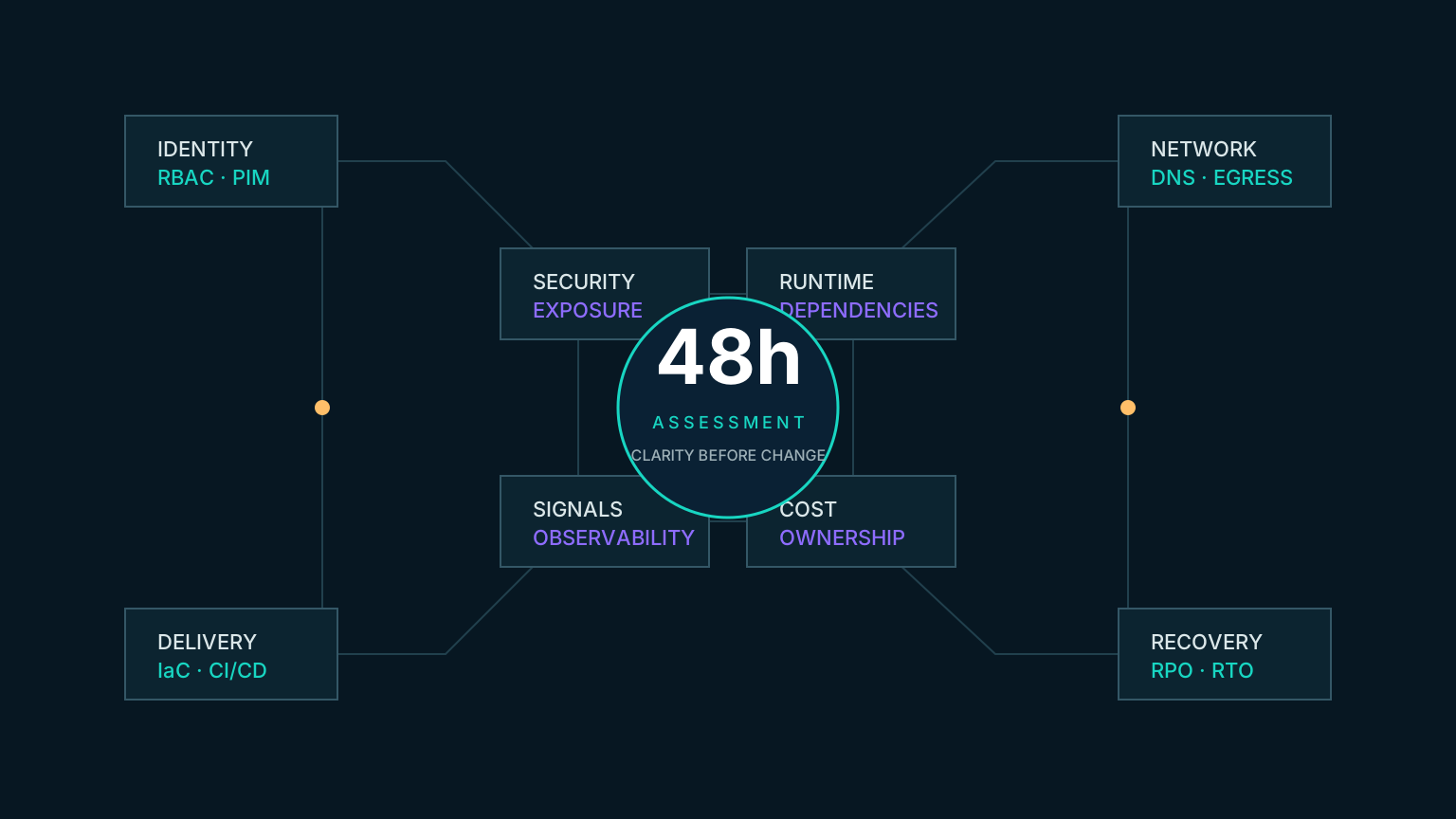
- perform a cloud assessment.
Turning a one-off project into a recurring service unnecessarily is not a good model either.
7. Internal DevOps vs DevOps as a Service
There is no universally better option.
The right choice depends mainly on workload, organisational maturity and the strategic importance of the platform.
| Factor | Internal DevOps | DevOps as a Service |
|---|---|---|
| Cost | Mostly fixed | Adaptable to scope |
| Onboarding | Requires hiring | Usually faster |
| Business knowledge | Very high over time | Requires onboarding |
| Specialisation | Depends on the people hired | Can bring multiple capabilities |
| Availability | Depends on internal capacity | Depends on contracted service |
| Scaling capacity | Requires hiring | Can usually adapt faster |
| Cultural integration | Very high | Lower than an internal team |
| Best fit | Permanent structural need | Variable or specialised need |
In many organisations, the right answer is hybrid.
The internal team keeps platform ownership while external specialists provide support in particular areas, projects or periods of growth.
This can reduce dependency while preserving access to specialist expertise.
If you are evaluating recurring rather than project-based help, see how Nubyron structures ongoing DevOps support alongside an internal team.
8. Freelancer, consultancy or DevOps as a Service?
It is also useful to distinguish between different engagement models.
Freelance DevOps engineer
A freelancer can be a very good fit when there is:
- a clearly defined scope;
- a specific need;
- enough internal capability to direct the work.
The main limitation may appear when knowledge becomes concentrated in a single external person.
Traditional DevOps consultancy
This is usually project-oriented.
Typical engagements include:
- assessments;
- migrations;
- implementations;
- transformations;
- architecture work.
It is suitable when there is a clear objective with a beginning and an end.
DevOps as a Service
This is more focused on recurring capability.
It may combine:
- platform evolution;
- operations;
- maintenance;
- automation;
- support;
- smaller projects.
The boundaries between these models are not always strict.
What matters is knowing exactly what responsibility each party is taking and what outcome the organisation expects.
9. How much does DevOps as a Service cost?
There is no universal price.
And it may be a warning sign if someone can give you a final price without first understanding your platform.
Cost depends far more on operational complexity than on the simple number of servers.
Two companies with ten virtual machines may require completely different levels of effort.
Factors that can affect cost include:
- number of applications;
- number of environments;
- cloud providers;
- service criticality;
- Kubernetes usage;
- deployment frequency;
- security requirements;
- out-of-hours support requirements;
- incident volume;
- existing automation;
- documentation quality;
- existing Infrastructure as Code;
- availability requirements;
- accumulated technical debt.
That is why pricing solely around a question such as:
“How many servers do you have?”
is usually too simplistic.
Modern infrastructure has many more dimensions.
Hour bundles
These can work well when the need is relatively small, variable and reasonably predictable.
Monthly service
This makes more sense when maintenance, operations, platform evolution and recurring support are required.
Fixed-scope project
Suitable for migrations, implementations or transformations with a clearly defined outcome.
Hybrid model
This may combine a recurring baseline with additional projects when required.
You can review our DevOps service models and pricing to understand the different ways we structure engagements.
Publishing pricing references should not mean reducing a complex platform to a flat monthly fee.
It should help companies understand whether the expected investment is broadly aligned before starting a commercial conversation.
10. What should you expect from a DevOps provider?
Before outsourcing any part of your infrastructure, there are several questions worth asking.
Where will the code live?
Terraform, pipelines, manifests and configuration should remain in repositories controlled by your organisation.
How will changes be documented?
Important decisions should be reconstructable months later.
You should not have to rely on remembering what somebody did at 2 a.m. during an incident.
Who will have access to production?
Access should be named, auditable and based on least privilege.
Shared administrator credentials should not be part of the operating model.
How will incidents be handled?
It should be clear:
- what counts as an incident;
- who responds;
- during what hours;
- through which channels;
- what response expectations exist;
- what falls outside the service.
What happens if the relationship ends?
Your company should still be able to operate.
A response such as:
“Without us, you cannot touch anything”
is a sign that too much dependency has been created.
Who is responsible for what?
A simple responsibility matrix can prevent many problems.
| Area | Customer | Provider |
|---|---|---|
| Product development | ✓ | |
| Cloud architecture | Shared | Shared |
| CI/CD | Shared | Shared |
| Infrastructure | Depends on model | Depends on model |
| Application security | ✓ | |
| Observability | Shared | Shared |
| Production changes | According to process | According to process |
Not every organisation needs exactly the same operating model.
What matters is that everyone knows who owns each responsibility.
11. DevOps as a Service should not create permanent dependency
A provider may operate infrastructure for years and still be the right choice.
The problem begins when the company loses the ability to understand its own platform.
A good model should continuously leave behind:
- version-controlled infrastructure;
- documentation;
- runbooks;
- diagrams;
- architectural decisions;
- recovery procedures;
- service inventories;
- shared knowledge.
There is an interesting paradox here:
A good DevOps provider should make it possible for you to replace them one day.
If changing provider means rebuilding all operational knowledge from scratch, the dependency has become excessive.
The goal should be to provide capability.
Not to capture the customer.
12. Are DevOps as a Service and SRE as a Service the same?
Not exactly.
Although both models can share many capabilities.
DevOps generally focuses on improving the relationship between development and operations while automating software delivery and infrastructure.
SRE — Site Reliability Engineering — usually places greater emphasis on service reliability through practices such as:
- SLIs;
- SLOs;
- error budgets;
- incident management;
- observability;
- capacity planning;
- automation of operational work.
In small and medium-sized organisations, the boundaries can be quite blurred.
The same engineer or team may work across both areas.
That is why the important question is not which label to use.
It is what problem the organisation needs to solve.
If the main pain points are:
- deployments;
- infrastructure;
- automation;
- cloud;
- Kubernetes;
the engagement will probably have a strong DevOps focus.
If the main concerns are:
- availability;
- incidents;
- SLOs;
- resilience;
- observability;
the need is closer to SRE.
13. The mistake of trying to hire a tool
Another common problem is defining the requirement like this:
“We need a Kubernetes person.”
“We need a Terraform person.”
“We need an AWS specialist.”
Those skills may be necessary.
But they should not be the objective.
Technology is the means.
The actual requirement may be:
- deploy without manual intervention;
- reduce incidents;
- modernise an application;
- regain control over cloud costs;
- remove dependencies;
- reduce delivery time;
- prepare the platform to scale;
- improve recoverability.
Define the outcome first.
Choose the tools afterwards.
If you start with the tool, there is a risk of reshaping the problem around a solution that was already selected.
14. How to decide which model your company needs
We can simplify the decision into four scenarios.
Scenario A: Everything works and you only need small improvements
You probably do not need a fully managed service.
An hour bundle or focused projects may be enough.
Scenario B: Development spends too much time on infrastructure
DevOps as a Service can help recover engineering capacity and start structuring operations.
Especially when there is not yet enough work to justify building an internal specialist team.
Scenario C: You are going through a major transformation
For example:
- cloud migration;
- Kubernetes adoption;
- modernisation;
- VMware exit;
- new architecture;
- Infrastructure as Code implementation.
In this case, it is often better to treat the transformation as a project first and decide afterwards who will operate the resulting platform.
Scenario D: Production needs recurring attention
If maintenance, monitoring, incidents, changes and continuous improvement are permanent needs, you probably need either a recurring service or an internal team.
The right answer depends on workload, the knowledge you need to retain and which responsibilities you want to delegate.
15. Checklist before outsourcing DevOps
Before engaging a DevOps service provider, try to answer these questions:
- What specific problem are we trying to solve?
- Do we need one-off or recurring capacity?
- How much development time is currently spent on infrastructure?
- Who owns production today?
- Do we have Infrastructure as Code?
- Are deployments automated?
- Do we have sufficient observability?
- Are backups regularly tested?
- Is documentation up to date?
- Is critical knowledge concentrated in one person?
- Do we need support outside business hours?
- Which responsibilities must remain internal?
- Where will code and documentation live?
- How would we end the relationship with the provider if necessary?
- Do we genuinely need a recurring service, or would a project be enough?
If several of these questions do not have a clear answer, the first step probably should not be buying more tools.
It should be understanding the current state of the platform.
16. The goal is not to “have DevOps”
DevOps should not become another permanent layer of complexity.
If an organisation needs more and more people every year to perform the same operational tasks, something probably needs to be reviewed.
Automation should reduce repetitive work.
Infrastructure as Code should reduce manual changes.
CI/CD should reduce deployment risk.
Observability should reduce the time required to understand an incident.
Documentation should reduce dependency on individual knowledge.
A well-designed platform should allow developers to spend more time building the product and less time maintaining infrastructure.
So the objective should not be:
“to have DevOps”.
It should be to create operations that are increasingly:
- simple;
- automated;
- predictable;
- recoverable;
- documented.
So, is DevOps as a Service right for every company?
No.
If you have enough work to keep a specialist team busy permanently, building that capability internally probably makes sense.
If you only need to solve one specific problem, a project may be enough.
But when a company needs recurring specialist capability, wants to reduce the operational burden on developers or cannot yet justify a full platform team, DevOps as a Service can be a particularly useful model.
The decision should always start with the problem.
Not the label.
Frequently asked questions about DevOps as a Service
What is DevOps as a Service?
DevOps as a Service gives companies access to specialised DevOps, Cloud, automation and operations capabilities without requiring them to build a full internal team from the start.
It can cover infrastructure, CI/CD, Infrastructure as Code, observability, Kubernetes, maintenance and other areas related to platform operations.
When does outsourcing DevOps make sense?
It can make sense when developers spend too much time on infrastructure, recurring specialist capacity is needed, a full DevOps team is not yet justified or additional expertise is required during a migration, modernisation or technology transformation.
Is it better to hire an internal DevOps engineer or use DevOps as a Service?
It depends on workload and how strategically important the platform is.
A permanent, deeply integrated need with enough workload usually favours internal capability.
A variable, specialised or temporary requirement may be better suited to DevOps as a Service.
Many companies use a hybrid model.
How much does DevOps as a Service cost?
Cost depends on platform complexity, number of applications and environments, cloud providers, criticality, Kubernetes usage, deployment frequency, support requirements, availability targets and the existing level of automation.
Operational complexity is therefore usually more useful for estimating cost than simply counting servers.
Are DevOps as a Service and SRE as a Service the same?
Not exactly.
DevOps usually covers infrastructure, automation and software delivery, while SRE places greater emphasis on reliability, observability, SLIs, SLOs, error budgets and incident management.
There is significant overlap between the two in many organisations.
Is your team spending too much time on infrastructure?
You do not need to decide immediately whether you need a new hire, a project or a recurring service.
At Nubyron, we can start by understanding what is happening, where your engineering time is being consumed and which areas genuinely require specialist attention.
Explore Nubyron’s DevOps as a Service model
For software companies with a working product and one defined infrastructure problem, a Cloud Assessment provides a bounded way to begin with real engineering work and a clear technical roadmap.